Art Archive • Sharaku
Ukiyo-e
Sharaku Gallery (Guide)
Mica-ground actor faces that stare back from Edo’s theater district.
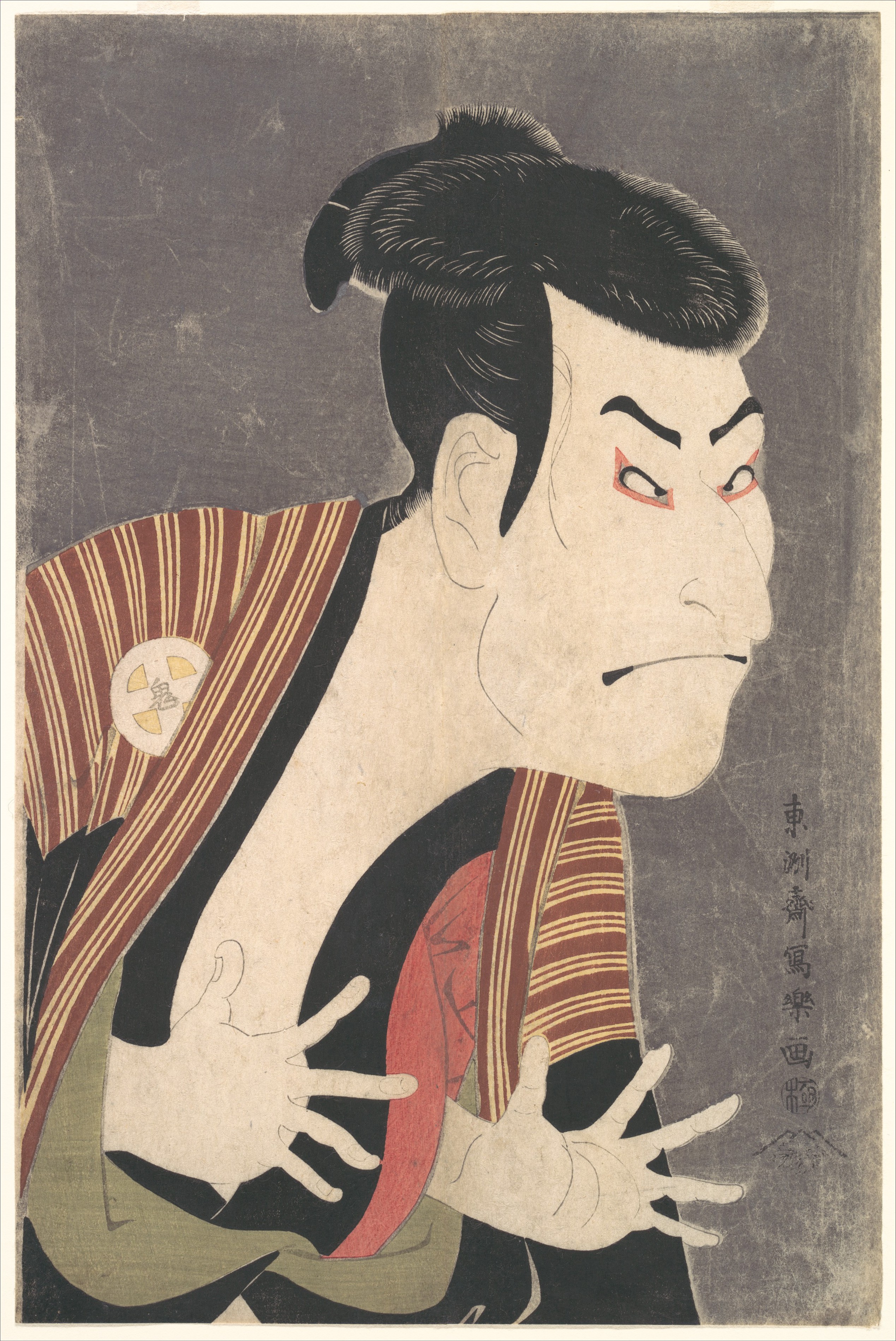
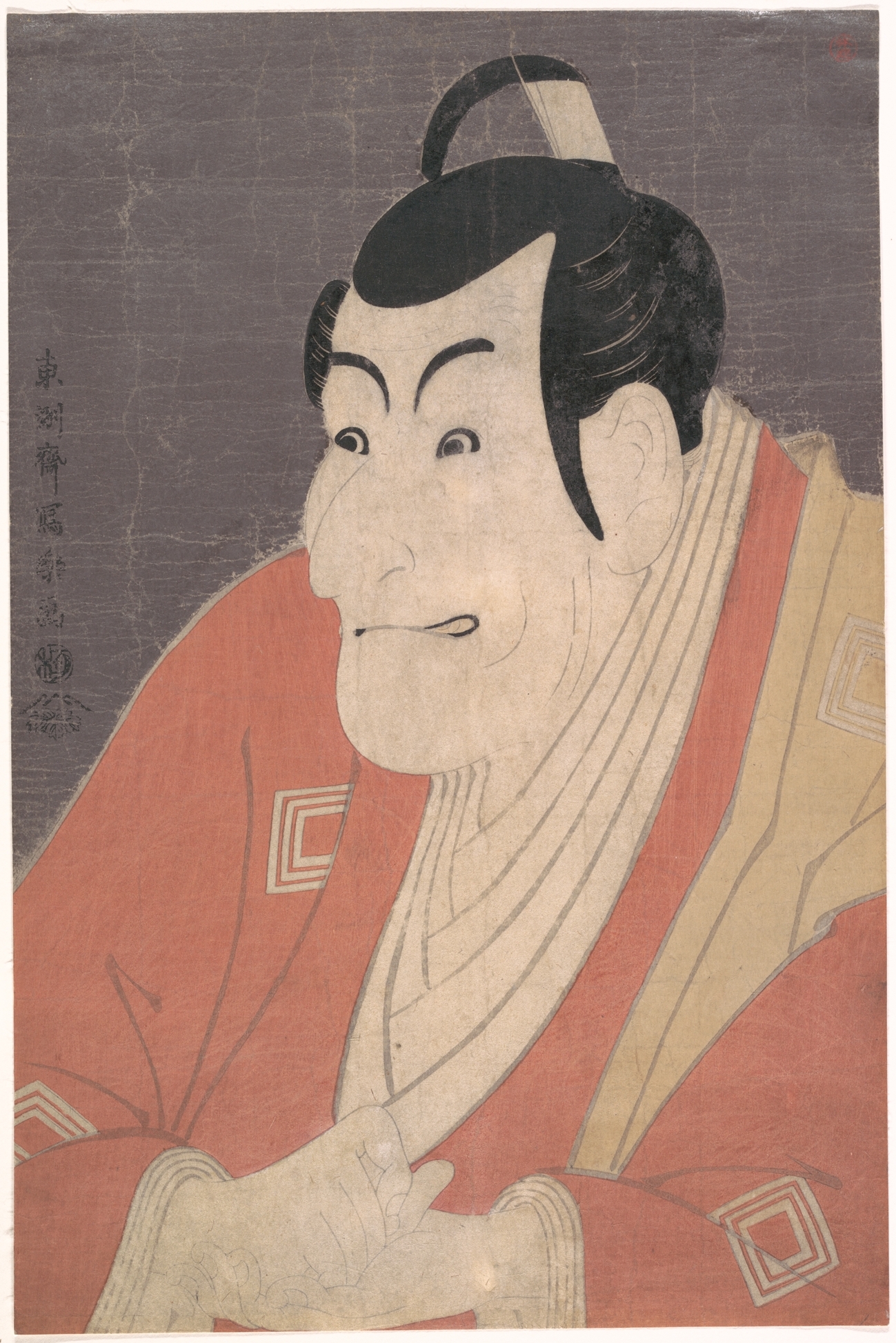
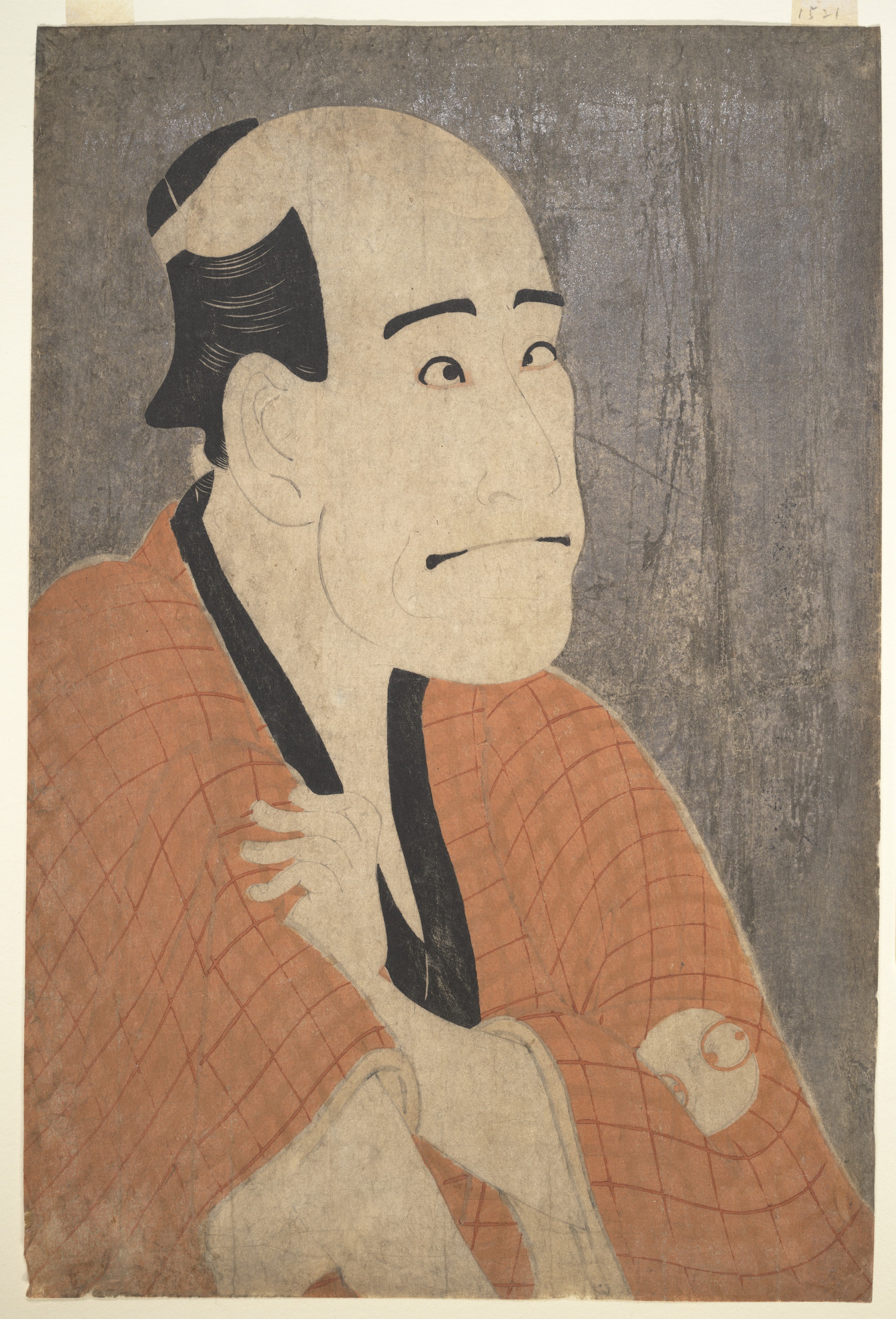
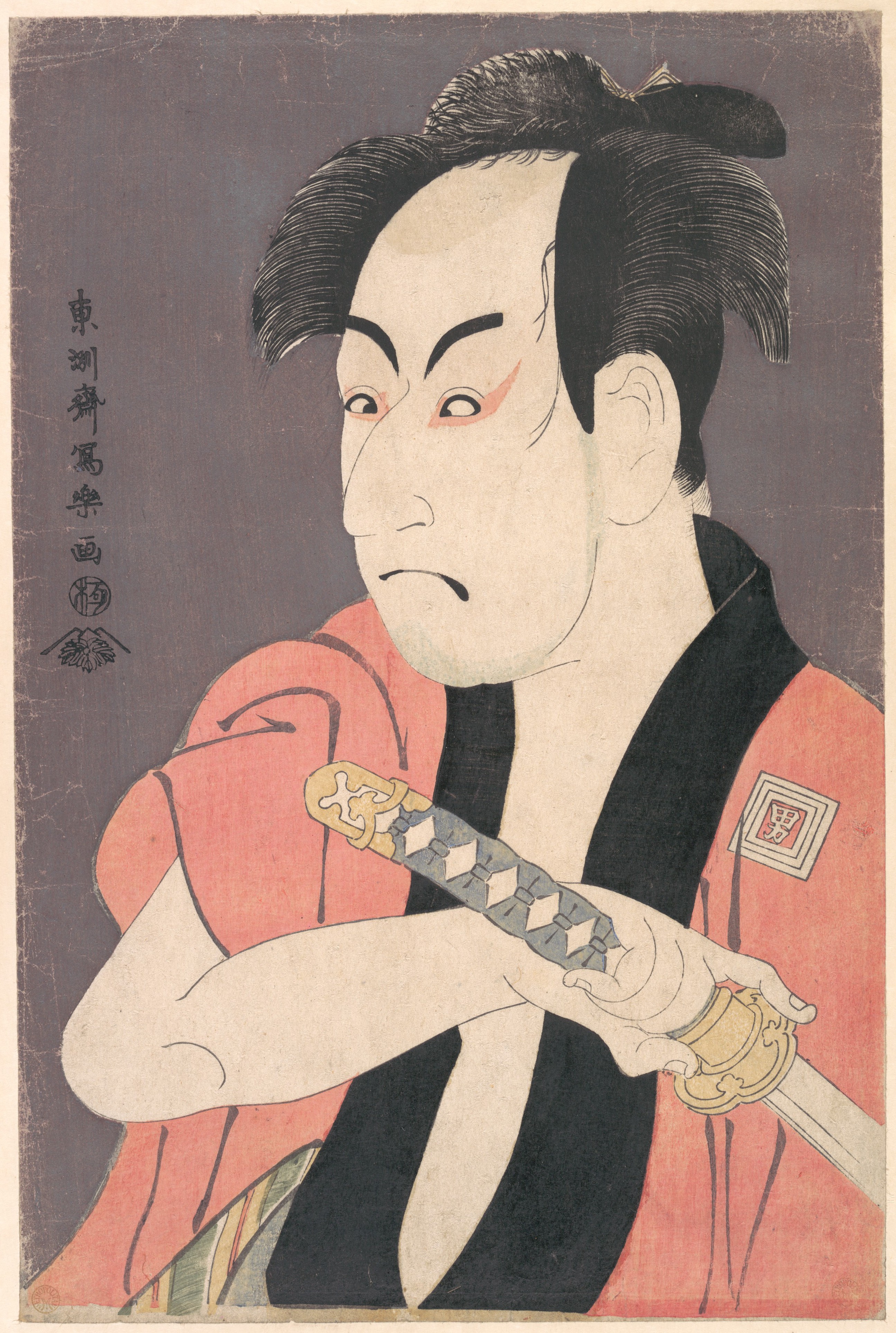
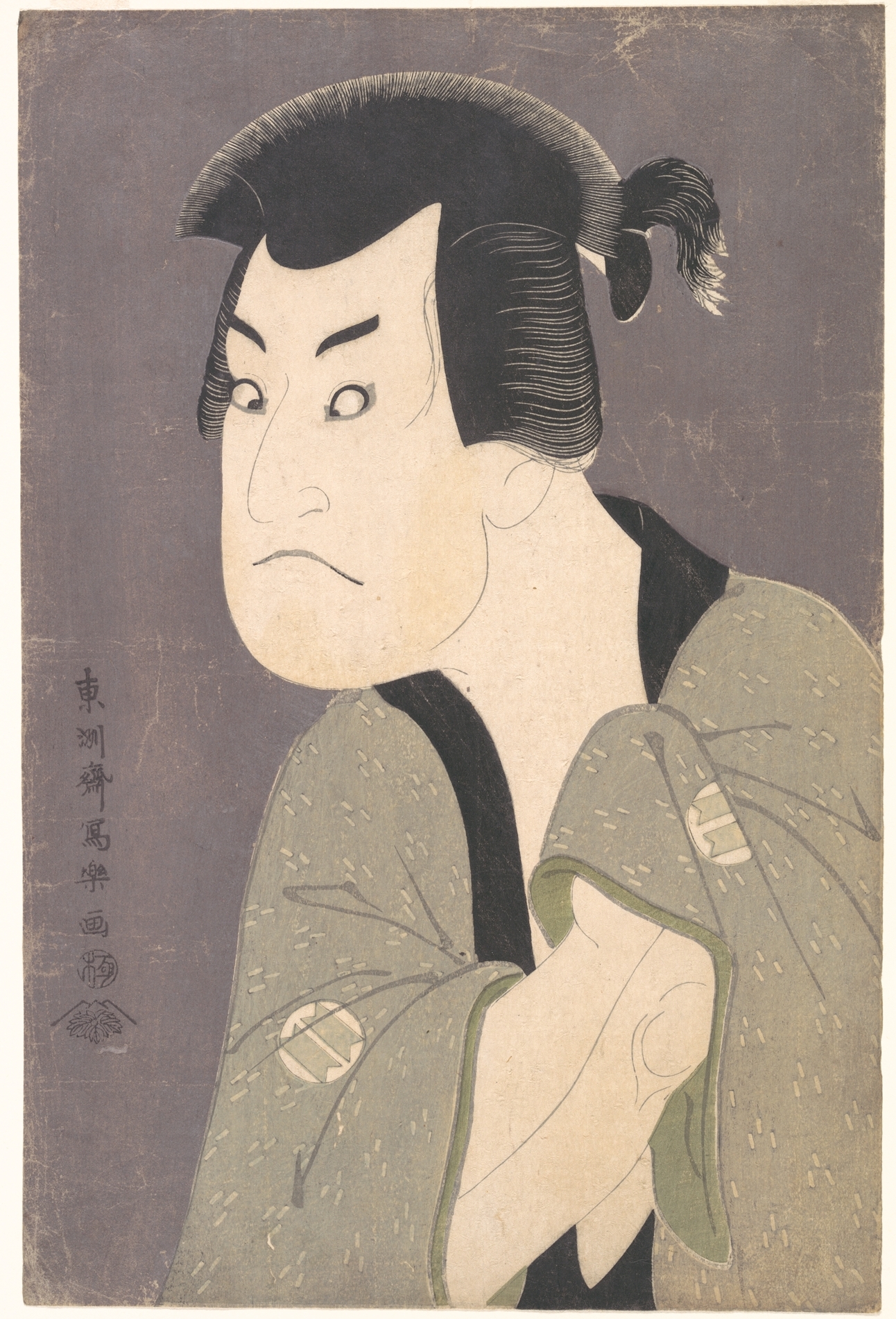
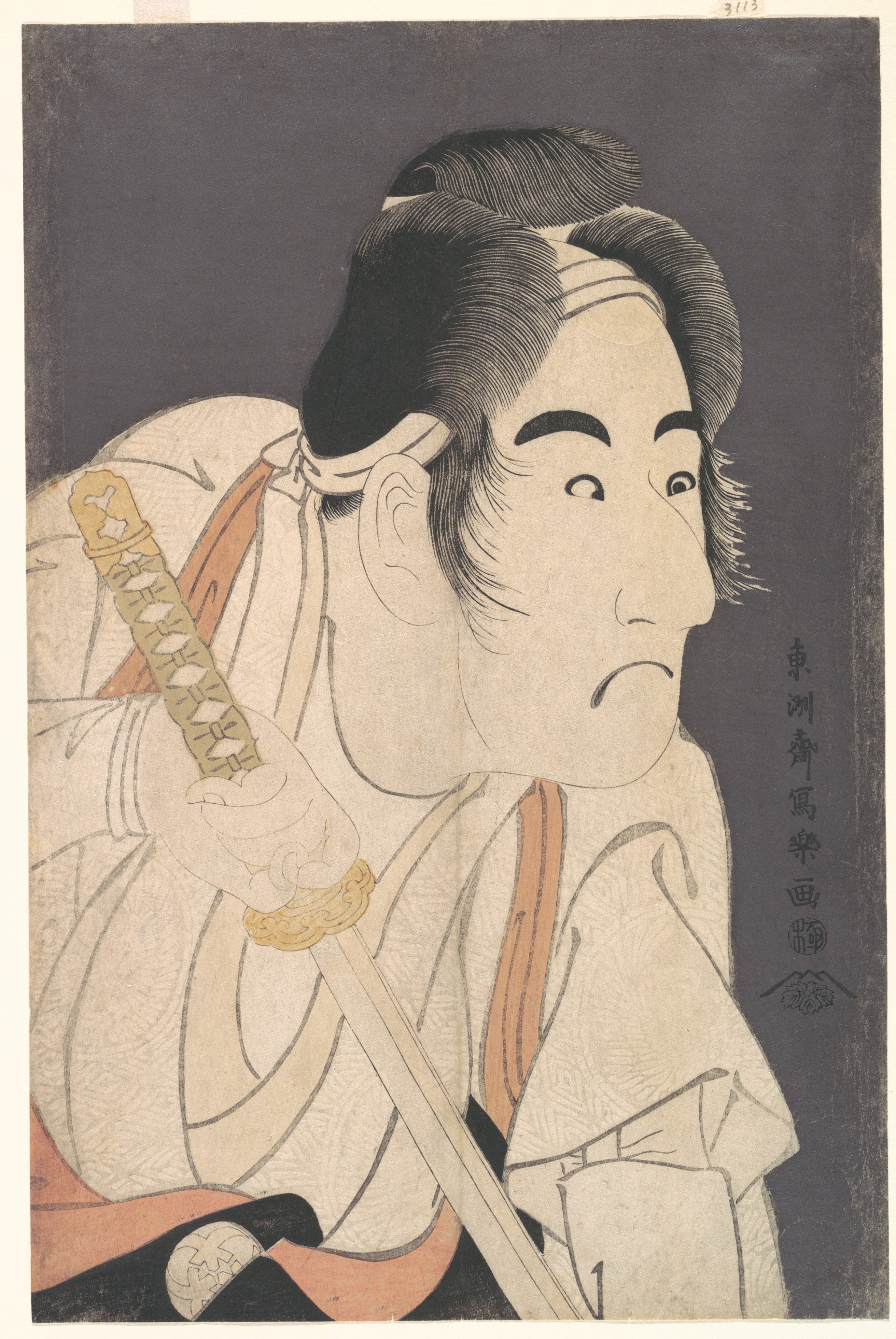
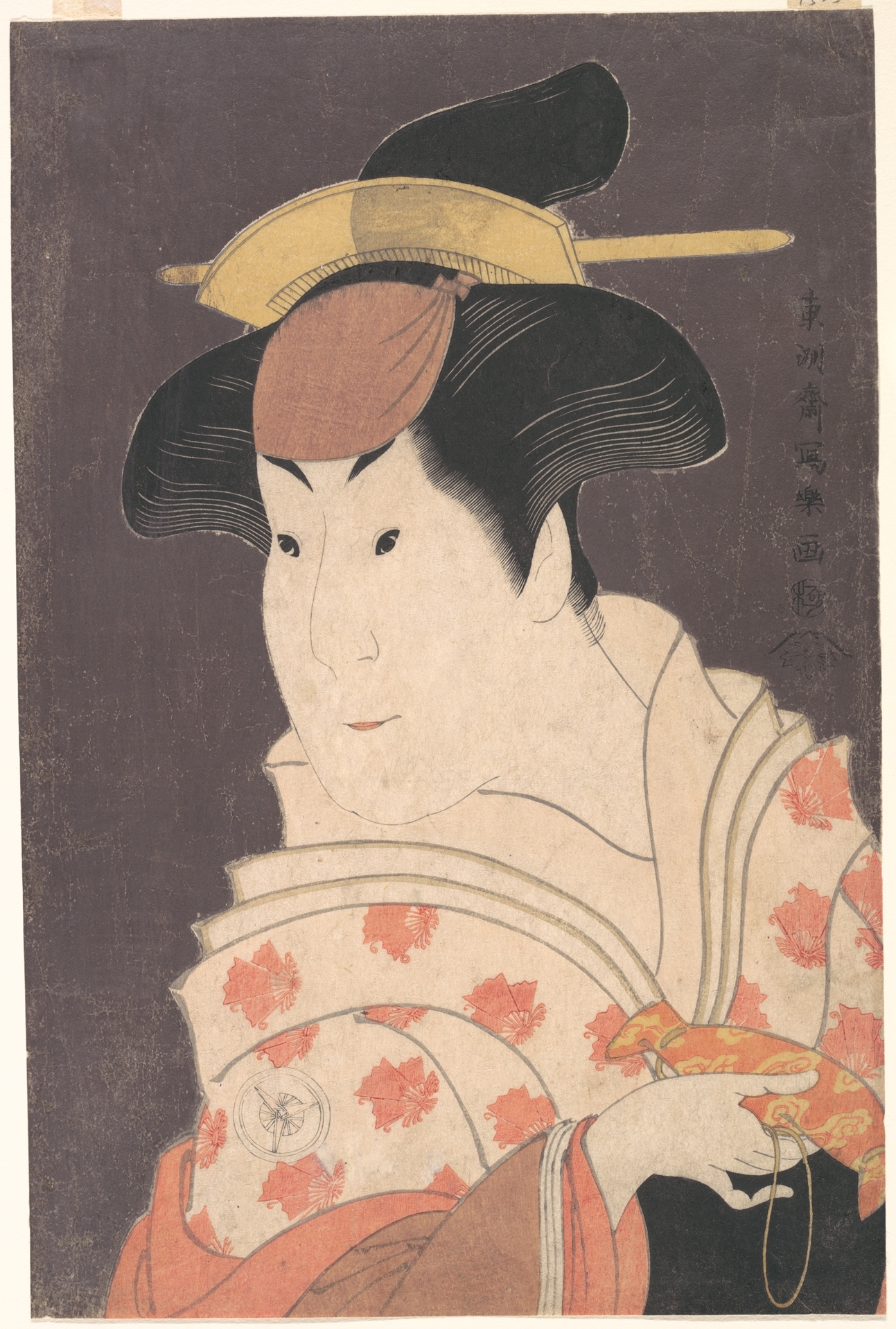
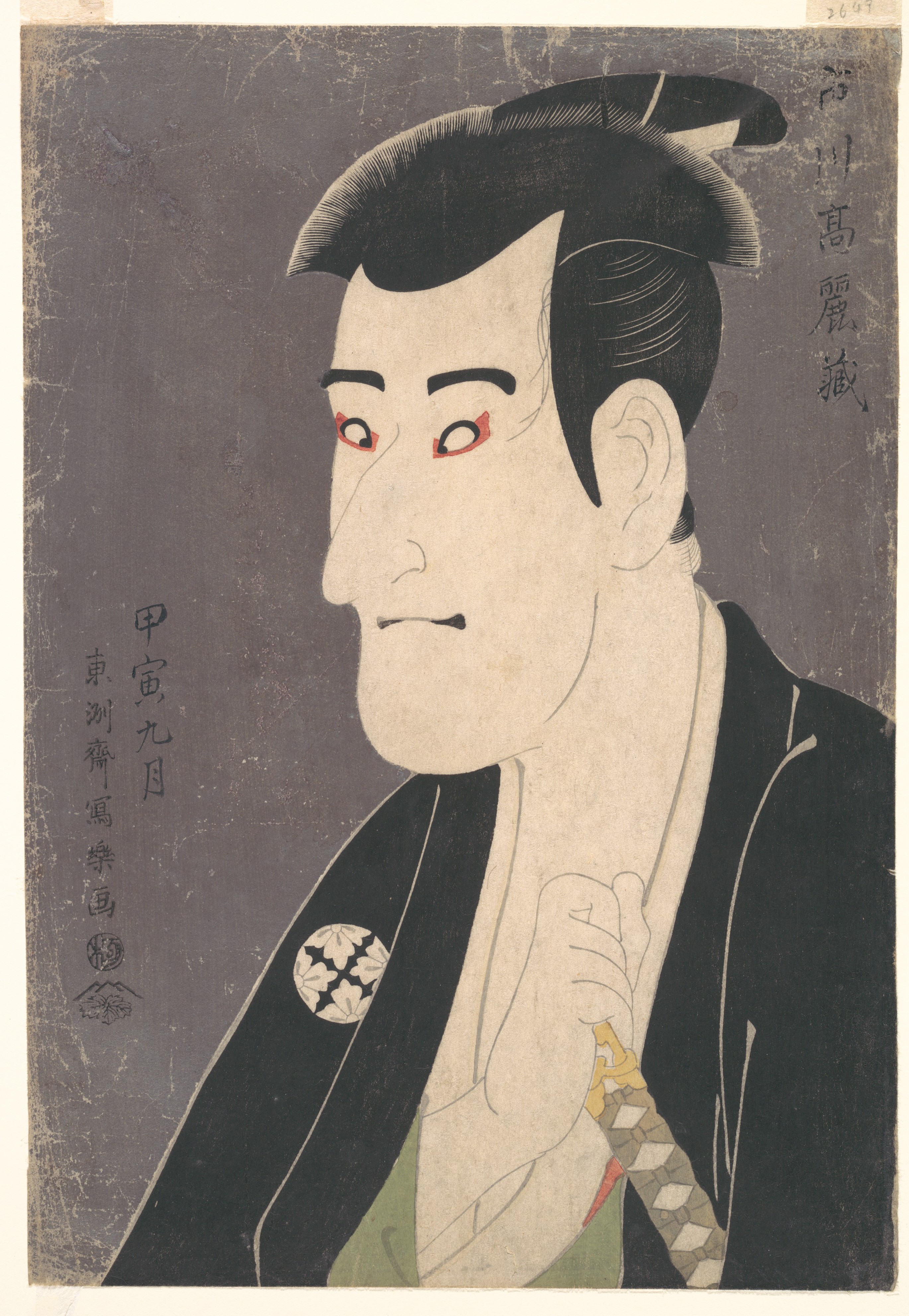
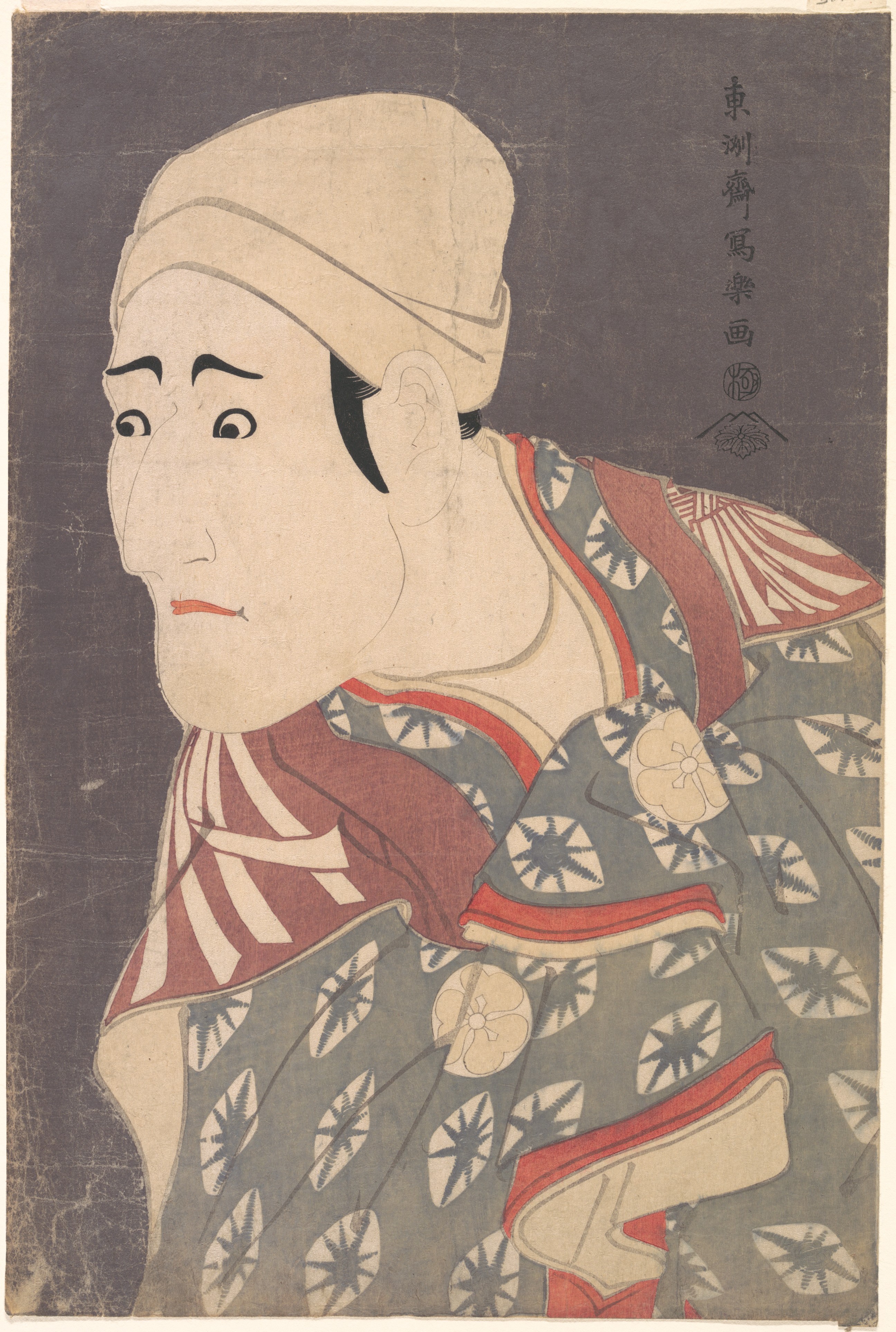
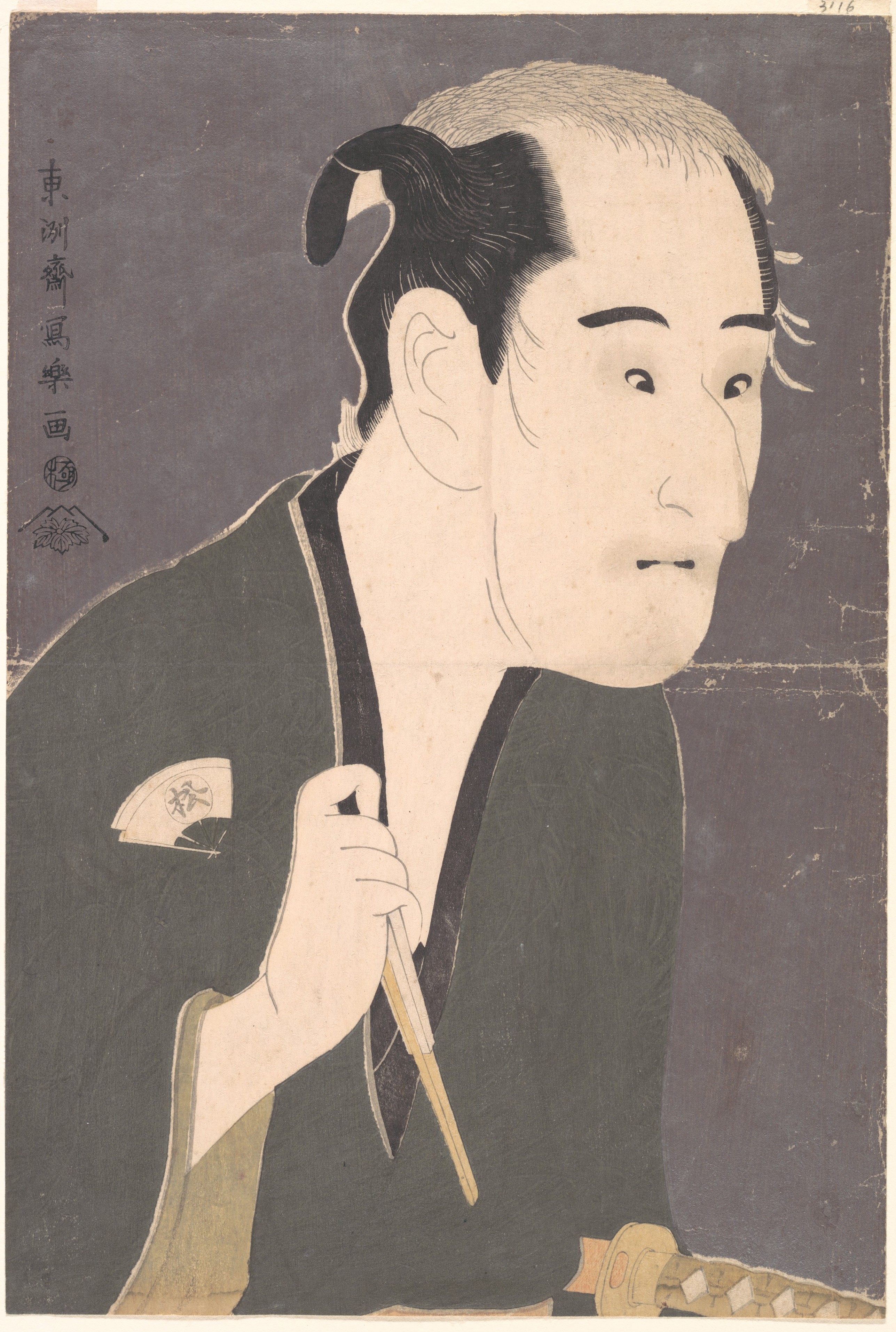
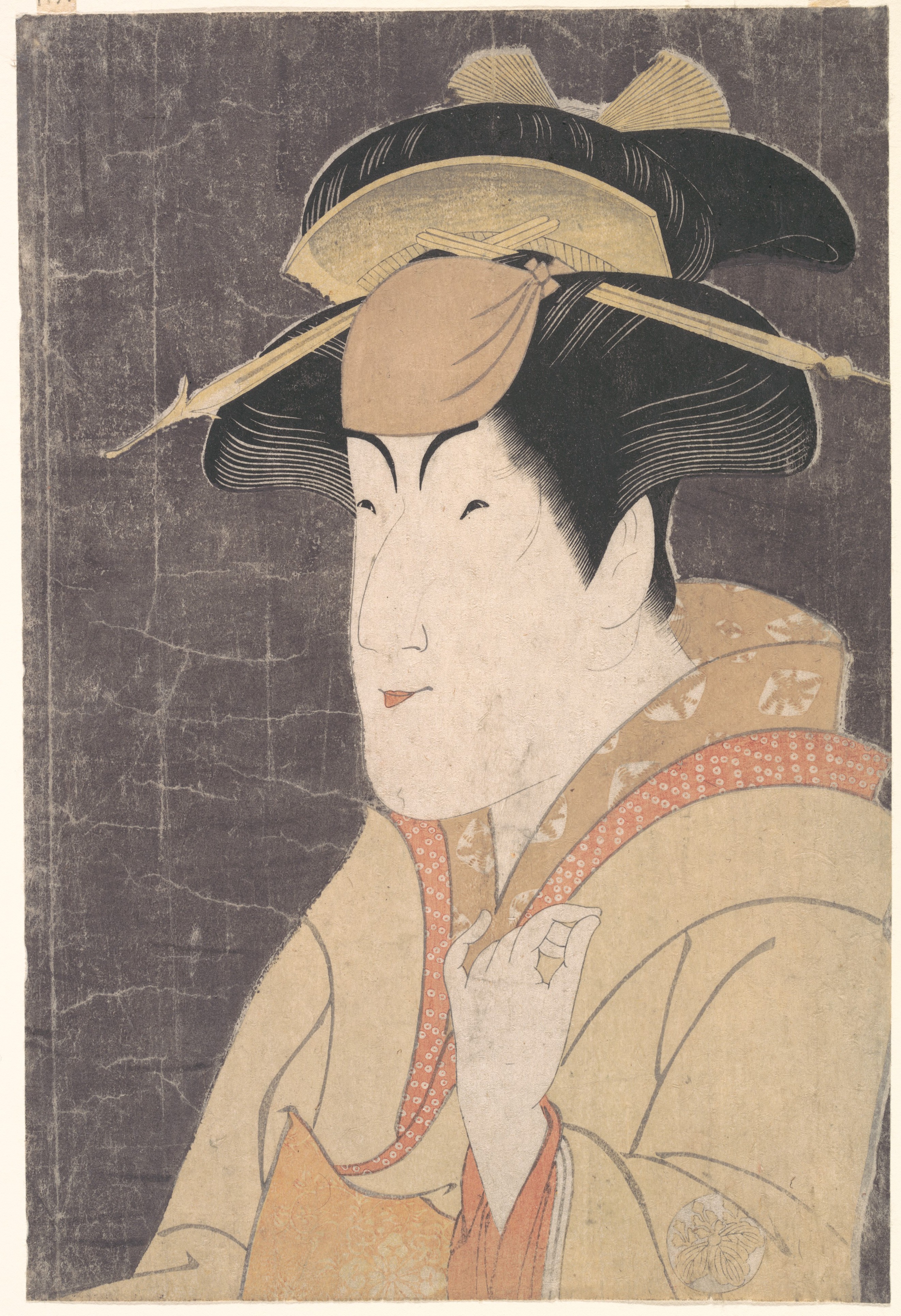
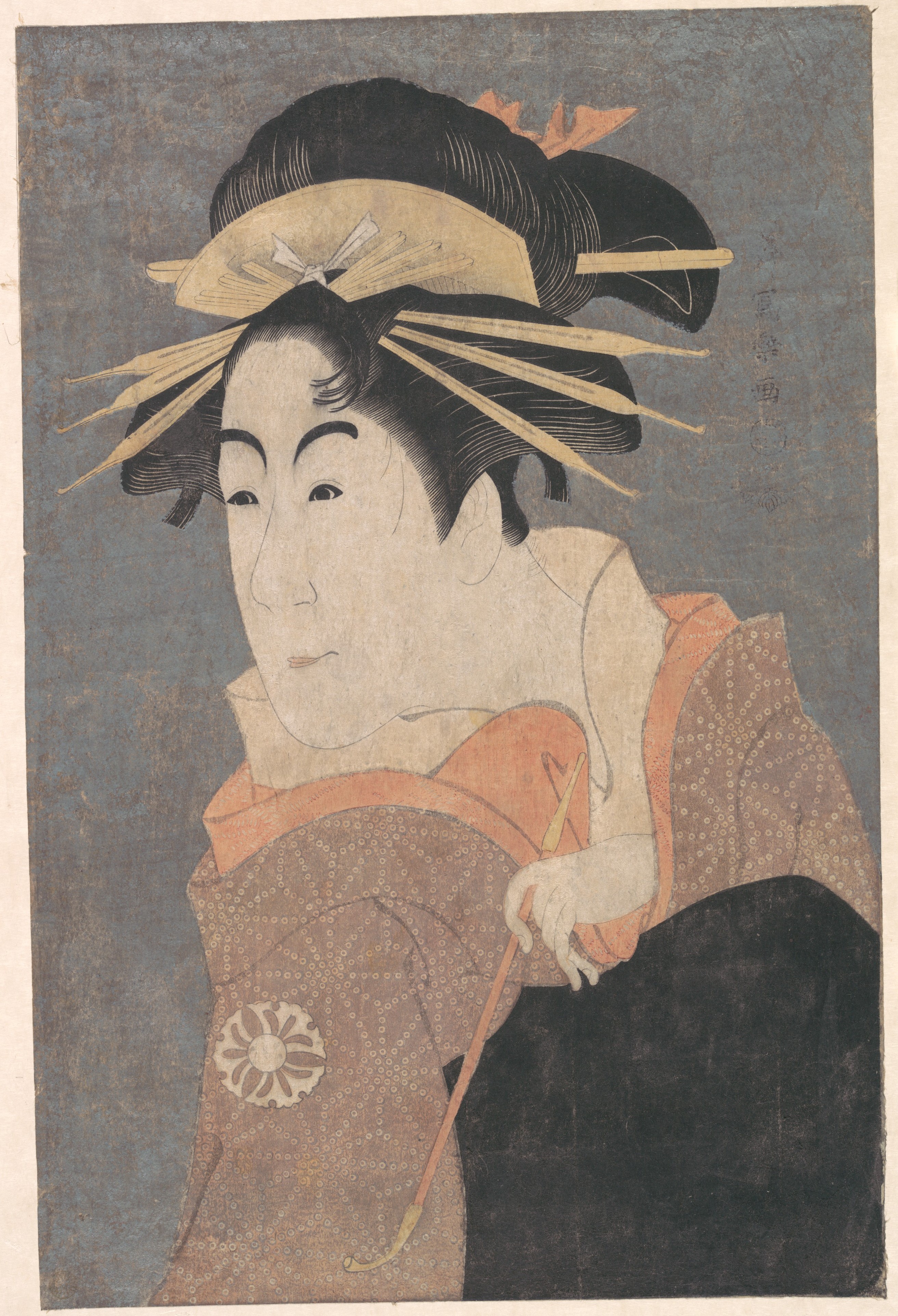
Toshūsai Sharaku’s ōkubi-e actor portraits (1794) — seventeen works from The Metropolitan Museum of Art, public domain.
Sharaku’s actor portraits compress late-Edo theater culture into a single face—a singular lineage within ukiyo-e. In a career of roughly ten months he left many masterpieces, bold in deformations of expression and gesture that set him apart from his contemporaries. Sharaku’s identity long remained a mystery; today the Noh actor Saitō Jūrōbei, retainer of Awa-Tokushima domain, is the leading candidate.
This gallery is built around the twenty-eight mica-print ōkubi-e published in the fifth month of Kansei 6 (1794), drawn from The Met’s holdings and released in sequence. Mica printing (kira-zuri) dusts powdered mica into the background for a distinctive sheen, lifting the actor’s face from an unmodulated ground. This group is widely regarded as the peak of Sharaku’s brief career—the moment his style cuts most sharply.
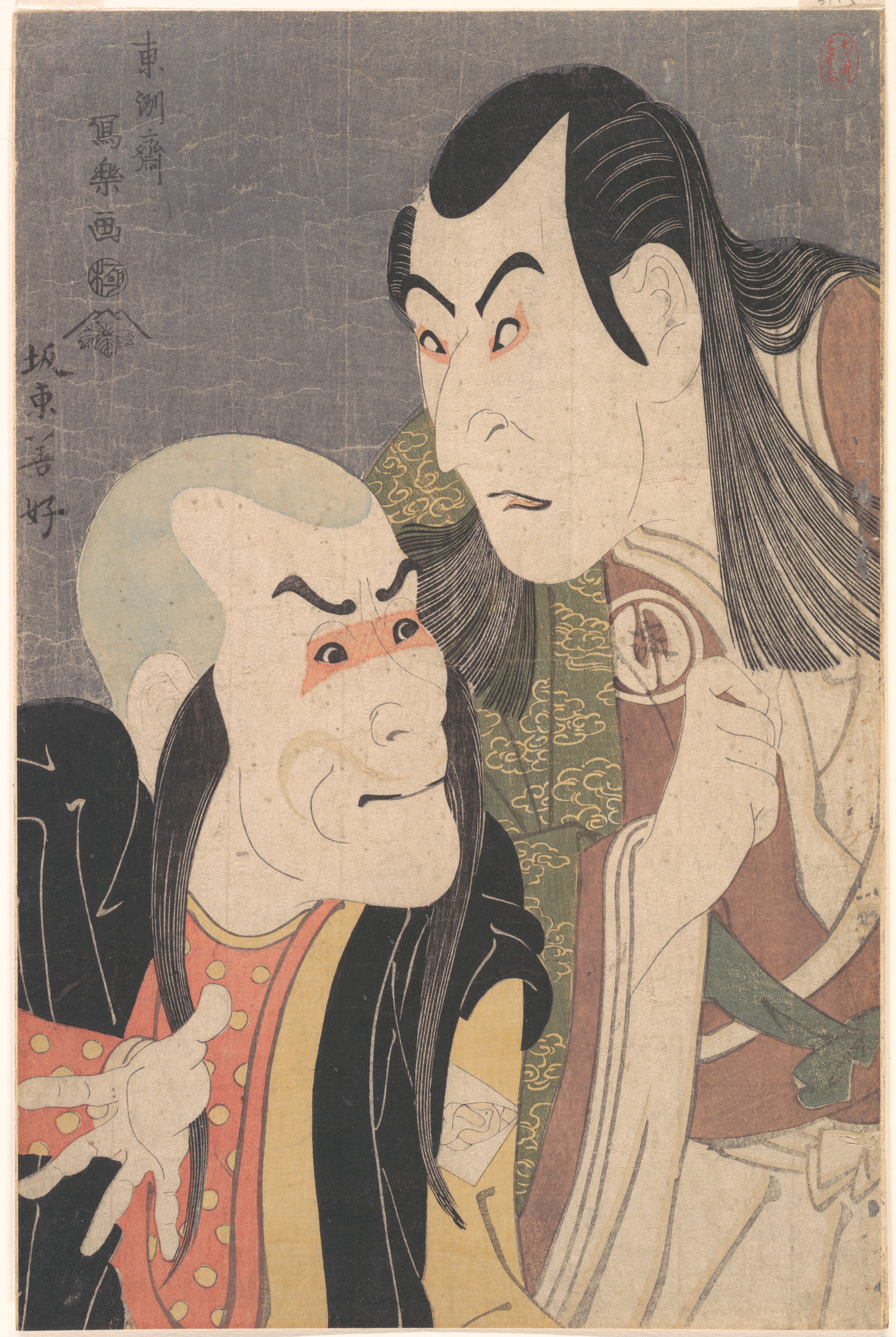
Ōkubi-e
雲母摺大首絵
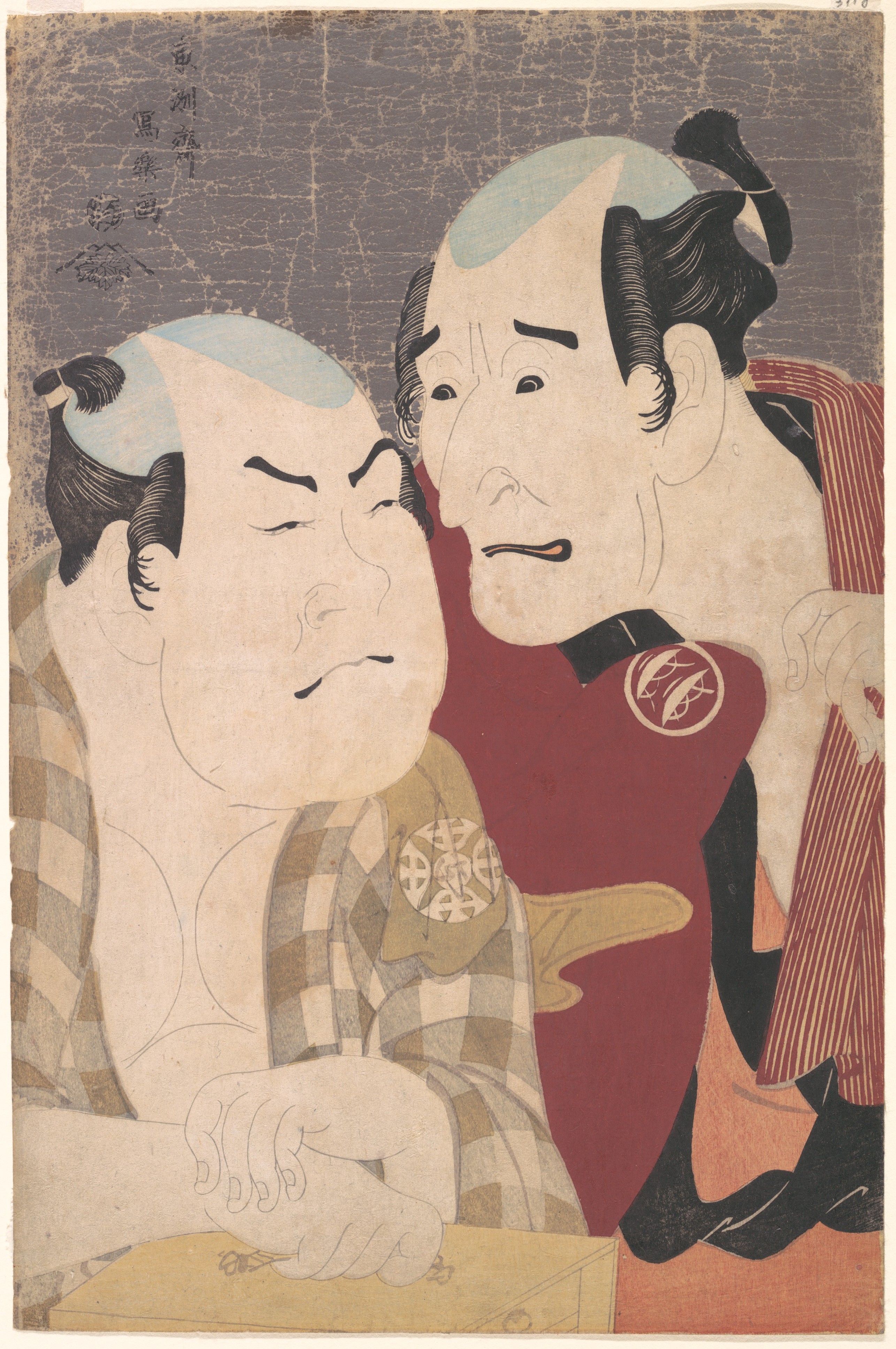
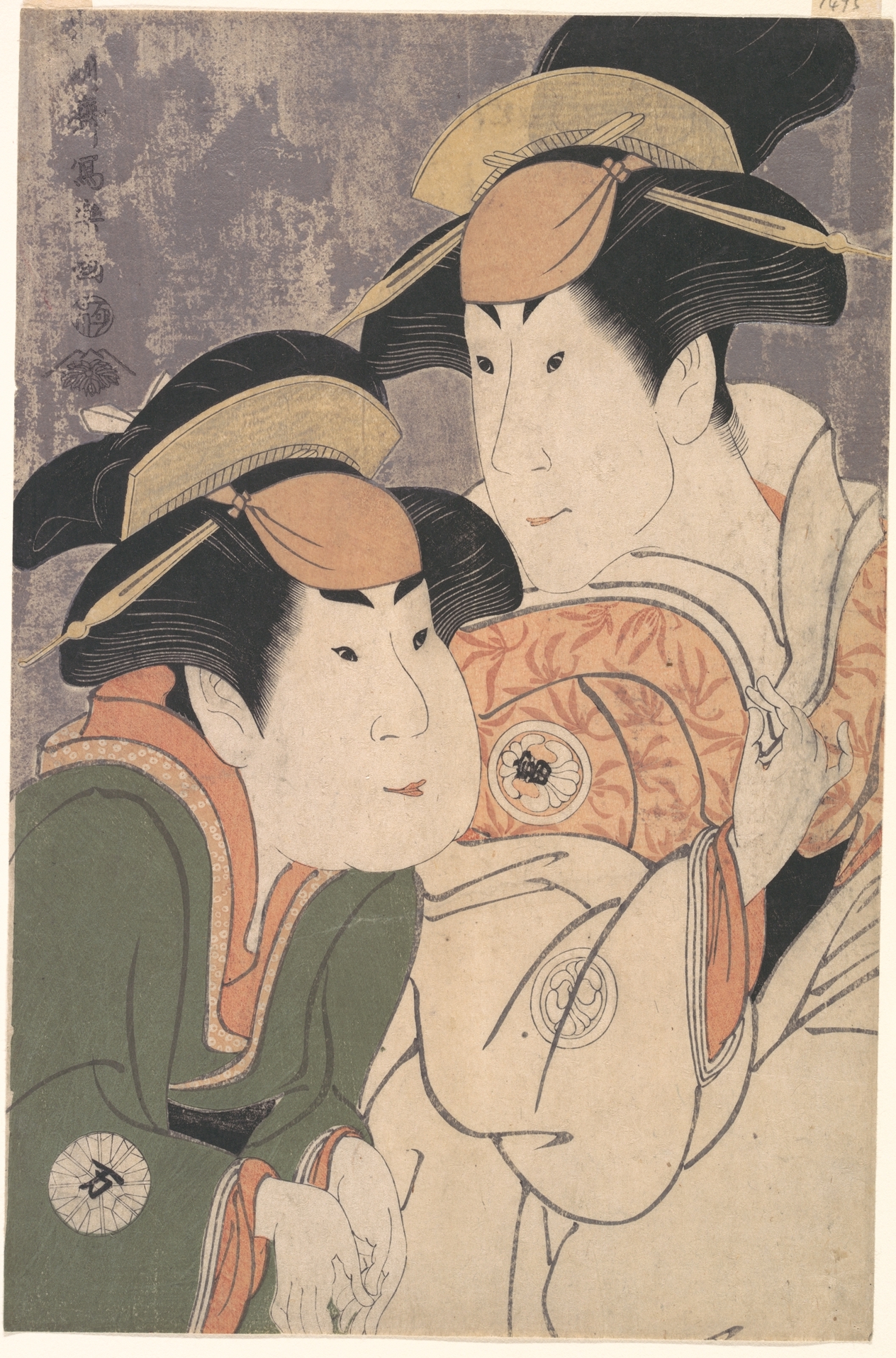
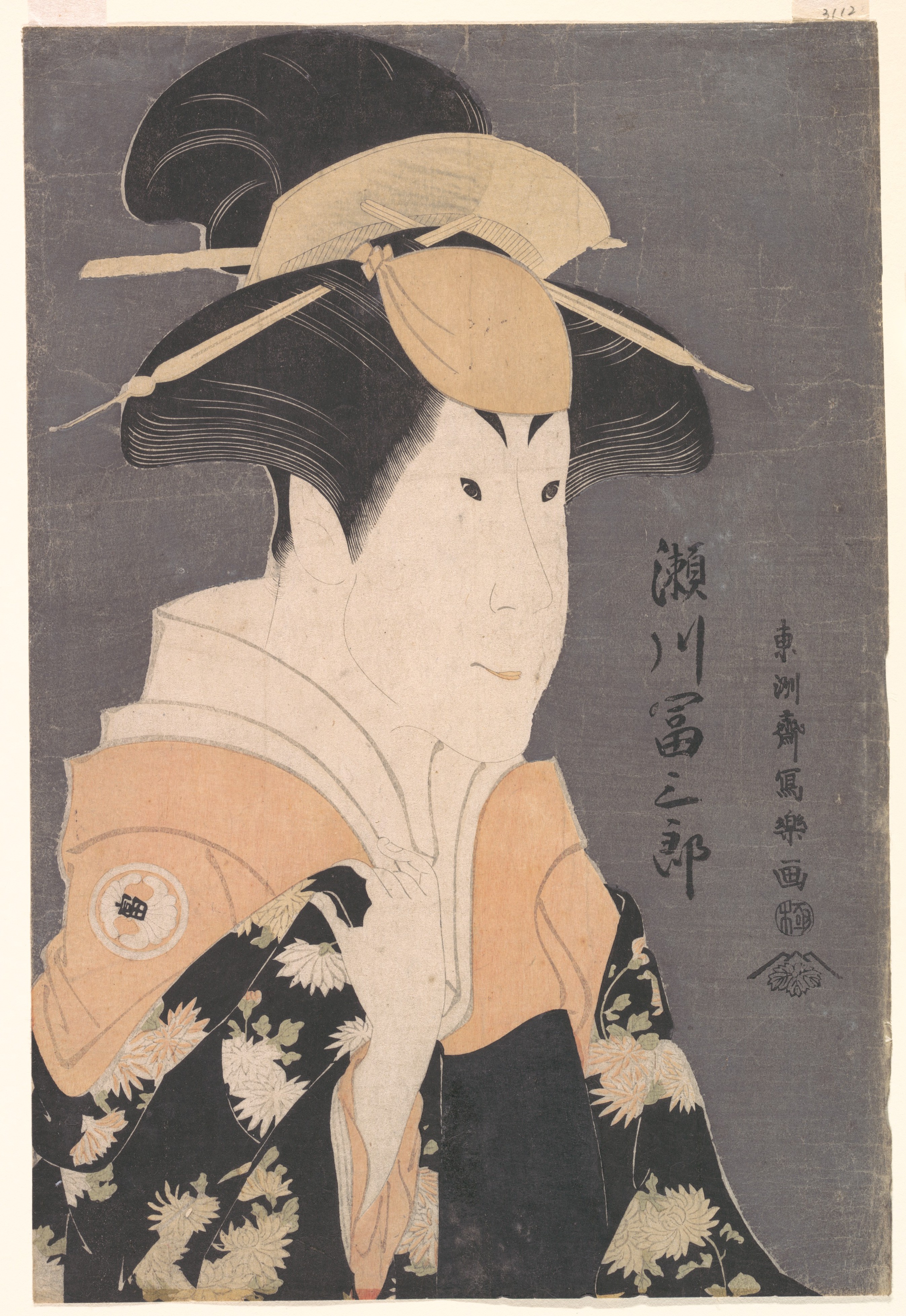
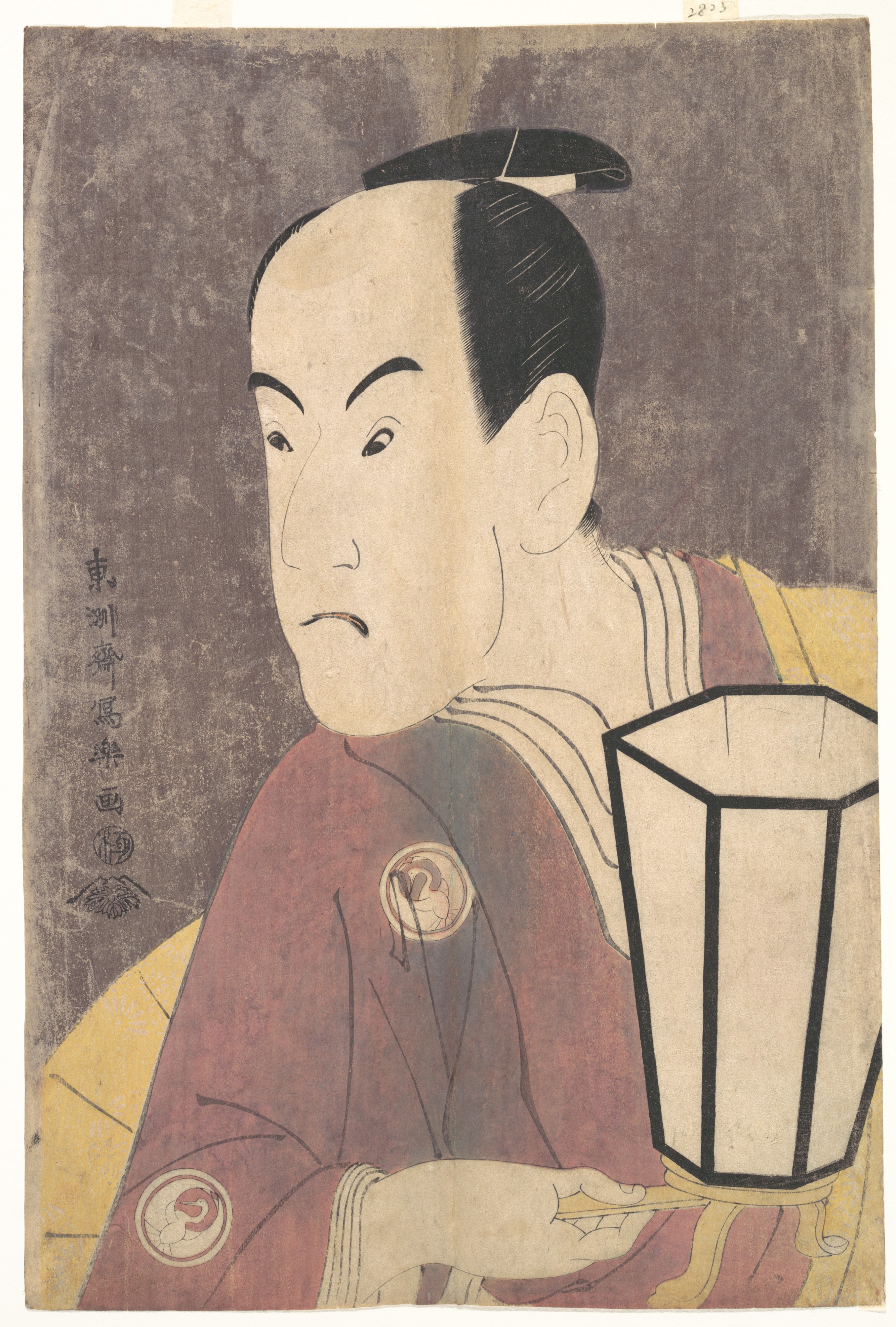
Mica-dusted backgrounds lift exaggerated brows and eyes — actor portraits compressed into a single face at the peak of Sharaku’s brief career.
- Kabuki Actor Ōtani Oniji III as Yakko Edobei
- Kabuki Actor Ichikawa Ebizō (Ichikawa Danjūrō V) in the play The Colored Reins of a Loving Wife
- Arashi Ryūzō I as Ishibe Kinkichi in the Play Hana Ayame Bunroku Soga
- Ichikawa Omezō I in the Role of Yakko Ippei from the Play Koinyōbō somewake tazuna
- Sakata Hangorō III as Fujikawa Mizuemon in the Play Hana Ayame Bunroku Soga
- Bandō Mitsugorō II as Ishii Genzō in the Play Hana-ayame Bunroku Soga
- Iwai Hanshirō IV as Shigenoi in the Play Koinyōbō Somewake Tazuna
- Kabuki Actor Ichikawa Komazō III as Shiga Daishichi in the Play A Medley of Tales of Revenge
- Kabuki Actor Morita Kan’ya VIII as the Palanquin-Bearer in the Play A Medley of Tales of Revenge
- Onoe Matsusuke I as Matsushita Mikinojō in the Play Katakiuchi noriyaibanashi
- Nakayama Tomisaburō as Miyagino in the Play Katakiuchi Noriyaibanashi
- Matsumoto Yonesaburo as Kewaizaka no Shosho in the Play Katakiuchi Noriyaibanashi
- Nakajima Wadaemon and Nakamura Konozō as Bōdara no Chōzaemon and Kanagawaya no Gon
- Segawa Tomisaburō II and Nakamura Manyo as Yadorigi and Her Maid Wakakusa
- Segawa Tomisaburō II as Yadorigi in the Play Hana Ayame Bunroku Soga
- Bandō Hikosaburō III as Sagisaka Sanai in the Play Koinyōbō Somewake Tazuna
- Sawamura Yodogorō II and Bandō Zenji as Kawatsura Hōgen and Onisadobō
High-resolution digital downloads (best-set JPEG/ZIP on SUZURI): Ukiyo-e digital downloads · 日本語. Checkout on SUZURI is in Japanese; prices are shown in yen.
Selected Sharaku actor portraits are available as print goods (17 works): SUZURI store .